Applied instantly at checkout. No minimum order value and no upper limit.


An automatic watch is a type of mechanical watch that uses the movement of your wrist to help power the watch. Unlike a typical quartz watch, an automatic watch does not rely on a conventional battery to run its mechanical movement.
Automatic watches are popular among watch enthusiasts because they combine traditional mechanical watchmaking with the convenience of a self-winding movement.
But how does an automatic watch actually work? Do automatic watches need batteries? How long do they run? And are they suitable for everyday wear?
Let's take a closer look.
An automatic watch is a mechanical watch with a self-winding movement.
Inside the watch is a component called a rotor. As you move your wrist while wearing the watch, the rotor moves and helps wind the watch's mainspring.
The mainspring stores mechanical energy, which is gradually released to power the movement and keep the hands moving.
This is why automatic watches are also commonly called self-winding watches.
Unlike quartz watches, which generally use a battery-powered electronic movement, automatic watches operate through a system of mechanical components.
The working principle of an automatic watch is based on mechanical energy.
When you wear an automatic watch, the natural movement of your wrist causes the rotor inside the watch to rotate.
The movement of the rotor transfers energy into the winding mechanism, helping to wind the mainspring.
The mainspring stores the mechanical energy generated through winding.
The stored energy is gradually released through the gears and regulating components inside the mechanical movement.
The controlled release of energy allows the hands of the watch to move and display the time.
In simple terms:
Wrist movement → Rotor → Mainspring → Mechanical movement → Hands
This entire process happens inside the watch without needing a conventional battery.
Traditional automatic mechanical watches do not need a conventional battery to power their movement.
Instead, the watch uses mechanical energy stored in its mainspring.
When you wear the watch, movement of your wrist helps keep the mainspring wound. Depending on the movement, some automatic watches can also be manually wound using the crown.
This is one of the biggest differences between an automatic watch and a typical quartz watch.
An automatic watch does not continue running indefinitely.
When the energy stored in the mainspring is eventually used up, the watch will stop.
This is completely normal.
If you leave an automatic watch unworn for a period of time, you may need to wind or wear it again before it starts running, depending on the specific movement.
The amount of time a watch can continue running after it has been sufficiently wound is known as its power reserve.
Power reserve refers to the amount of time a mechanical watch can continue running without receiving additional winding energy.
Different automatic movements have different power reserves.
This means you should always check the specifications of the particular automatic watch you are considering rather than assuming that every automatic watch will run for the same amount of time.
Automatic watches use mechanical movements, so their timekeeping can vary slightly.
The accuracy of an automatic watch can be influenced by factors such as:
Automatic watches are appreciated not only for their ability to tell time, but also for the mechanical engineering and craftsmanship inside the watch.
Automatic and quartz watches use different technologies to keep time.
| Automatic Watch | Quartz Watch |
|---|---|
| Mechanical movement | Electronic quartz movement |
| Uses stored mechanical energy | Typically uses a battery |
| Can be powered by wrist movement | Does not depend on wrist movement |
| Contains mechanical components | Uses electronic timekeeping |
| Popular with mechanical watch enthusiasts | Popular for convenience and easy everyday use |
Neither type is automatically better than the other.
An automatic watch can be a great choice for someone who enjoys mechanical watchmaking and the experience of wearing a self-winding timepiece.
A quartz watch can be a better choice for someone who prefers simplicity and convenience.
You can explore the Quartz Watches collection to compare the different styles and options available.
Yes, an automatic watch can be an excellent choice for everyday wear.
However, the right automatic watch depends on your lifestyle and personal preferences.
Before choosing one, consider factors such as case size, design, strap material, water resistance and movement.
Choose a case size that feels comfortable on your wrist and matches your preferred style.
A classic automatic watch can work well with formal clothing, while a sportier design may be more suitable for casual everyday wear.
The strap or bracelet can significantly affect both the appearance and comfort of a watch.
Leather, stainless steel and other materials can create very different looks.
Consider your daily routine and choose a watch with a water-resistance rating appropriate for how you plan to use it.
The movement is one of the most important parts of an automatic watch, so pay attention to the movement and specifications of the model you are considering.
Choosing an automatic watch is about more than simply selecting a mechanical movement.
Here are some important things to consider.
The case should feel comfortable and look proportionate to your wrist.
Think about whether you want a watch for formal occasions, everyday wear, business outfits or casual outfits.
Check which automatic movement is used and look at the specifications provided for the watch.
A stainless steel bracelet can create a more versatile and durable look, while a leather strap can provide a more classic appearance.
Choose a watch with a suitable water-resistance rating based on how you intend to wear it.
Case material, dimensions, crystal, strap, movement and other specifications can all make a difference when choosing the right automatic watch.
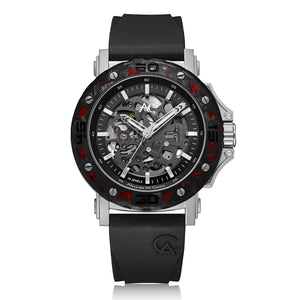
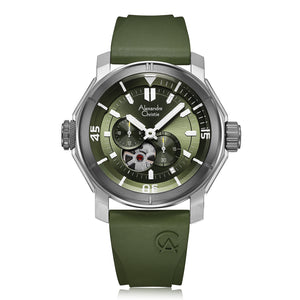
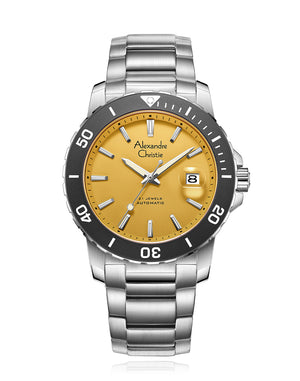
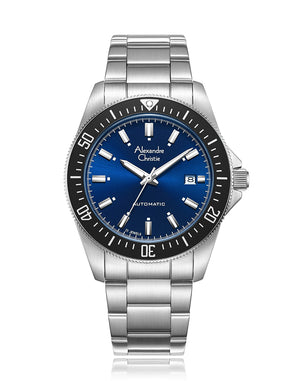
Alexandre Christie offers automatic watches in a variety of designs for different styles and preferences.
Here are some automatic watch options you can explore:
Discover the 3030MALRGBA Men's Classic Automatic Watch for a classic mechanical watch design.
The 9205MPRTTBARE Men's Power Reserve Automatic Watch combines automatic movement with a power-reserve-focused design.
The Cosmic offers a distinctive automatic watch design for those looking for something more contemporary.
Explore the complete Alexandre Christie Automatic Watches collection to discover more styles.
Automatic watches contain mechanical components that benefit from proper care.
Follow the manufacturer's instructions for winding and setting your watch, and avoid exposing it to conditions outside its stated specifications.
It is also important to pay attention to the watch's water-resistance rating and follow the recommended maintenance and servicing guidance.
When an automatic watch is not worn for an extended period, it may stop once its stored energy has been used. This is normal for a mechanical watch.
An automatic watch offers more than just a way to tell time.
For many watch enthusiasts, one of the biggest attractions is the mechanical movement working inside the case.
The combination of traditional mechanical engineering, self-winding functionality and distinctive watch designs makes automatic watches a popular choice for people who appreciate the craftsmanship behind a timepiece.
Explore the Alexandre Christie Automatic Watches collection to find a watch that suits your style.
Traditional automatic mechanical watches do not require a conventional battery to power the movement. They use mechanical energy stored in the mainspring.
An automatic watch uses the movement of the wearer's wrist to help rotate a rotor, which winds the mainspring and stores energy to power the mechanical movement.
The running time depends on the movement and its power reserve. Different automatic movements can provide different amounts of running time.
Automatic watches can provide reliable timekeeping, but their rate can vary depending on the movement and factors such as position, temperature, winding state and regulation.
Yes. An automatic watch can be suitable for everyday wear as long as its specifications match your lifestyle and intended use.
An automatic watch uses a mechanical movement powered by stored mechanical energy, while a quartz watch typically uses an electronic movement powered by a battery.
They can. Once the energy stored in the mainspring is used up, the watch will stop until it is wound or worn again, depending on the movement.
A self-winding watch is another common name for an automatic watch. It uses the movement of the wrist to help wind its mechanical movement.